
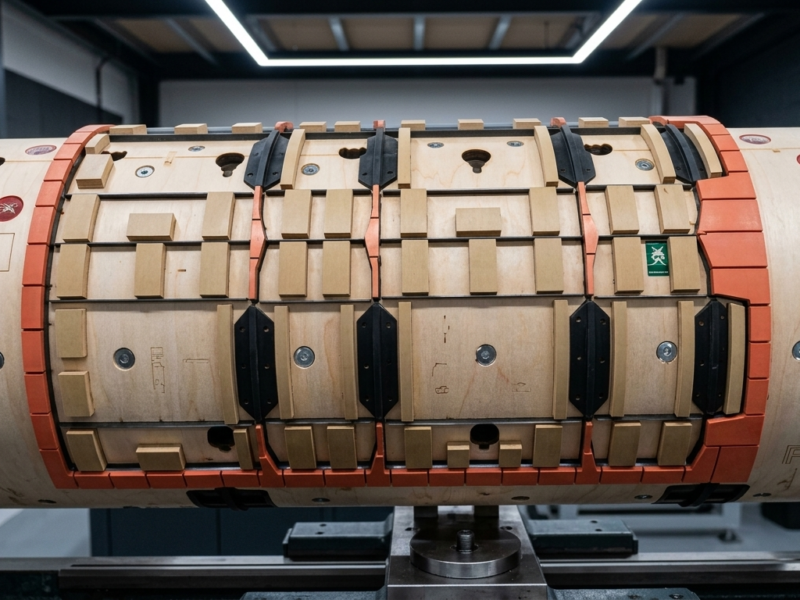
In corrugated manufacturing, consistency is everything. Whether you’re producing high volumes of RSCs, complex die-cut mailers, or heavy-duty industrial packaging, your output is only as reliable as the tools behind it.
At the center of that process is the steel rule die.
It’s easy to view a die as just another production component—but in reality, the quality of your die directly impacts:
- Cut accuracy
- Machine efficiency
- Board performance
- Waste levels
- And ultimately, your bottom line
A high-quality steel rule die doesn’t just cut board—it optimizes your entire production line.
In this article, we’ll break down the key elements that define a high-quality die, and why each one matters in real-world manufacturing.
Why Die Quality Matters More Than You Think
Before diving into the components, it’s important to understand the broader impact of die quality.
A poorly made die can lead to:
- Frayed or incomplete cuts
- Cracking along score lines
- Excessive dust and debris
- Feeding issues in rotary equipment
- Increased machine wear
- Higher scrap rates
On the other hand, a well-built die delivers:
- Clean, consistent cuts
- Smooth folding and gluing
- Faster run speeds
- Less downtime
- Lower material waste
In short: better dies = better production outcomes.
1. Steel Rule Quality & Hardness
The steel rule is the cutting edge of your die—literally.
What Matters:
- Hardness level (measured in Rockwell)
- Edge sharpness and finish
- Durability over long runs
Why It’s Important:
If the rule is too soft, it will dull quickly, leading to inconsistent cuts and increased pressure requirements. If it’s too hard, it can become brittle and prone to chipping.
A properly selected steel rule balances edge retention and flexibility, ensuring:
- Longer run life
- Cleaner cuts over time
- Reduced need for frequent die maintenance
For high-volume corrugated operations, this is critical to maintaining efficiency.
2. Precision in Die Cutting Tolerances
Tolerance refers to how accurately the die matches the intended design dimensions.
What Matters:
- Tight, consistent rule placement
- Accurate CAD-to-production translation
- Minimal deviation across the die surface
Why It’s Important:
Even small inconsistencies can create major downstream issues:
- Misaligned slots and tabs
- Poor folding performance
- Gluing problems
- Stacking instability
High-quality dies are built with tight tolerances, ensuring every box performs exactly as designed—especially important for automated lines.
3. Ejection Rubber: The Unsung Hero
Ejection rubber is often overlooked, but it plays a huge role in die performance.
What Matters:
- Correct rubber density (soft vs. hard)
- Strategic placement around cutting rules
- Consistent height and adhesion
Why It’s Important:
Ejection rubber helps:
- Push the board off the cutting rule after each impression
- Prevent board from sticking to the die
- Maintain smooth, continuous operation
Poor rubber setup can lead to:
- Board hang-ups
- Double feeds
- Inconsistent cuts
- Increased machine stoppages
A high-quality die uses optimized rubber configurations tailored to the specific board grade and application.
4. Scoring Rules & Creasing Performance
Cutting is only half the job—creasing (scoring) is just as important.
What Matters:
- Proper score rule height and profile
- Correct matrix pairing (for flatbed applications)
- Alignment with flute direction
Why It’s Important:
Incorrect scoring leads to:
- Cracked liners
- Weak fold lines
- Poor box integrity
A high-quality die ensures:
- Clean, controlled folds
- Strong structural performance
- Better results during folding and gluing
This is especially critical for heavier boards like double wall and triple wall corrugated.
5. Board Compatibility & Application Fit
Not all corrugated board is the same—and your die should reflect that.
What Matters:
- Flute type (B, C, E, BC, etc.)
- Board thickness
- Liner quality
- Application (e.g., retail packaging vs. industrial bins)
Why It’s Important:
A die that works perfectly for single-wall board may fail completely on double-wall or heavy-duty applications.
High-quality die manufacturers consider:
- Material characteristics
- Compression strength requirements
- End-use conditions
This ensures the die performs consistently across your specific production environment.
6. Clean Layout & Efficient Design
A well-designed die isn’t just about cutting—it’s about efficiency.
What Matters:
- Balanced layout for even pressure distribution
- Proper spacing between cuts and scores
- Optimized scrap removal
Why It’s Important:
Efficient die layouts lead to:
- Smoother machine operation
- Reduced strain on equipment
- Better material utilization
- Faster run speeds
Poor layouts can cause unnecessary wear, jams, and wasted board.
7. Build Quality & Assembly
Beyond individual components, overall craftsmanship plays a major role.
What Matters:
- Secure rule installation
- Clean joints and bends
- Strong die board construction
- Consistent finishing
Why It’s Important:
A well-assembled die:
- Holds up under pressure
- Maintains accuracy over time
- Reduces the risk of rule movement or failure
This translates directly into reliability on your production floor.
How High-Quality Dies Reduce Downtime
When all these elements come together, the result is a die that performs consistently—run after run.
The Impact on Your Operation:
- Fewer machine stoppages
- Less troubleshooting and adjustment
- Reduced scrap and rework
- Faster setup times
- Improved operator confidence
Ultimately, this means more uptime and higher throughput.
The Long-Term Cost Advantage
It’s tempting to choose a lower-cost die—but cheaper isn’t always better.
Low-quality dies often lead to:
- Shorter lifespan
- More frequent replacements
- Higher labour costs
- Increased material waste
A high-quality die, while potentially a higher upfront investment, delivers:
- Longer service life
- Better performance
- Lower total cost of ownership
Built for Performance in Western Canada & the PNW
For manufacturers in British Columbia, Alberta, Washington, and Oregon, having a reliable die partner is just as important as die quality itself.
At Fusion Die Lines, we combine:
- Precision manufacturing
- High-quality materials
- Application-specific design
- And a deep understanding of corrugated production
With our location in the Vancouver, BC area, we’re positioned to support box plants across Western Canada and the Pacific Northwest with both quality and speed.
Final Thoughts
A steel rule die might seem like a small part of your operation—but its impact is anything but small.
From cut quality to machine efficiency, from waste reduction to production speed, the right die makes a measurable difference.
If you’re experiencing issues on your line—or simply want to improve performance—it may be time to take a closer look at the quality of your dies.
Let’s Build Better Dies for Your Operation
At Fusion Die Lines, we focus on building high-performance steel rule dies that help your production run smoother, faster, and more efficiently.
If you’re looking to improve cut quality, reduce downtime, and get more out of your operation, reach out to our team—we’re here to help.
Recent Comments